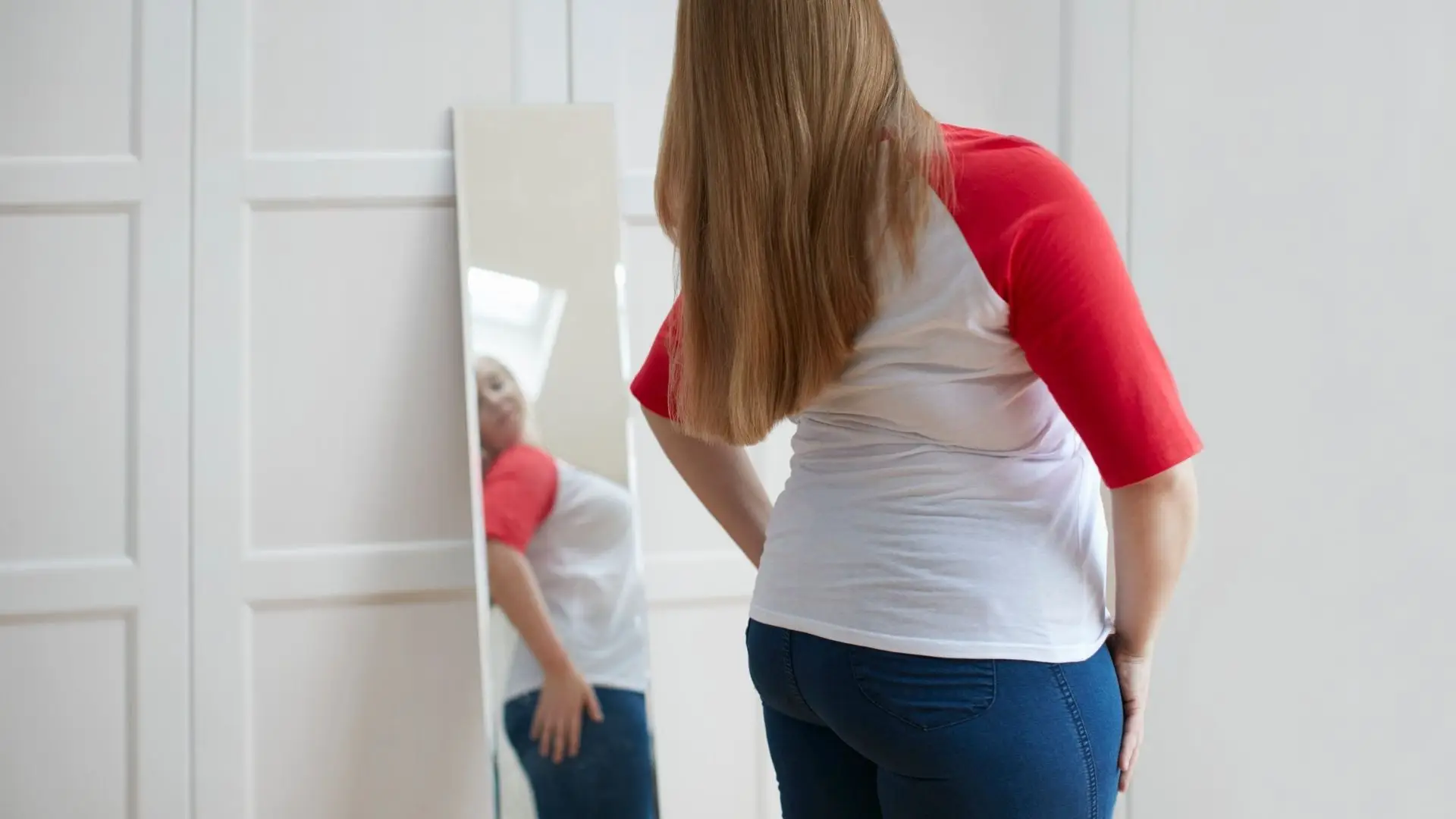
Do you feel embarrassed or self-conscious about your body?
Do your negative perceptions of your body interfere with you enjoying life?
Is weight a key factor in your sense of self-worth?
Everyone has a body-image. As someone goes through and experiences life, their body image can develop positively or negatively. It is extremely easy to harshly criticize your own body, leaving many individuals hyper-focused on alleged flaws that others may not even see. While everyone doubts themselves from time to time, a poor body image interferes with your ability to enjoy life needs to be taken seriously.
A chronically negative body image can lead to body dysmorphic disorder (BDD), a mental health disorder characterized by obsessiveness over a perceived appearance flaw. Individuals with BDD may see their perceived flaws as significant and instantly noticeable, even if it’s nonexistent to others. Negative body image can also lead to the development of eating disorders such as anorexia nervosa, bulimia nervosa, and binge eating disorder, and other mental health conditions like depression and anxiety.
Several factors can contribute to the development of a negative body image in women, including:
Cultural norms that value women based on their thinness and perceived beauty.
Family, peer, and self-criticism
The popularity of restrictive weight-loss fads like Keto, intermittent fasting, cleanses, weight loss pills, and supplements.
A genetic predisposition for eating disorders
Social media
Advertising
Signs It’s Time to Seek Counseling for Your Negative Body Image
Here are some common signs of a poor body image that may indicate it’s time for you to seek counseling:
Avoidance of social interactions due to insecurity about your body
Obsession or preoccupation with your weight or appearance
Feelings of shame, anxiety, embarrassment, or self-consciousness about your body
A belief that your body is flawed compared to others
Negative self-talk about your body
Use of unhealthy methods to change your weight, such as fad dieting, fasting, vomiting/purging, and smoking
How Can Counseling Help You Form a Positive Body Image?
Unfortunately, a poor body image will not go away by itself. It can lead to unhappiness in your relationships, workplace, and many other areas of your life. In serious cases, a negative or unhealthy body image may interfere with your overall well-being on a day-to-day basis.
Luckily, counseling is a proven method to help with negative body image. An experienced mental health professional is a great resource to help you explore and address your negative body image and begin the journey to self-confidence. With an experienced body image counselor, you can:
Recognize and acknowledge your negative body image
Eliminate unhealthy dieting or disordered eating behavior
Work toward self-acceptance
Accept your perceived flaws
Implement healthy lifestyle choices that work for you
Set realistic goals that are sustainable
Grow satisfied with your body size
Prioritize health over thinness or other aesthetic goals
Learn tools to combat negative self-talk
Begin Negative Body Image Counseling in St. Petersburg, Florida
A negative body image may be consuming your life, but it doesn’t have to. At McNulty Counseling and Wellness, we have counselors trained in the area of body image issues in women who can guide you in changing your negative beliefs and behaviors. Take the initiative and get back the life you once had that wasn’t fixated on what you eat, how much exercise you get, and what you look like so you can love your body and yourself again! Treatment for body image issues can change your life for the better. Give us a call today, 727-344-9867!
Book Your FREE Consultation Now! Psychiatry Services Your mind deserves expert care. We’re here to deliver it. If you’re struggling with anxiety, depression, attention issues, or mood changes that are disrupting your daily life, psychiatry can help. The right evaluation, the right medication, and the right support can change everything. Book Your FREE Consultation Now!…
For many people with moderate, severe, persistent, or recurring depression, combining psychotherapy with antidepressant medication can provide more comprehensive treatment than medication alone. Medication can reduce depressive symptoms and support mood regulation, while therapy addresses thought patterns, behaviors, relationships, stressors, and coping skills that may contribute to depression. Research also suggests that psychotherapy, alone or…
When we hear or read about depression, our first initial thoughts are around the common symptoms that individuals experience like sadness, feelings of worthlessness/hopelessness, and disinterest. And, while this is true for many who suffer from clinical depression, others may have different symptoms depending on how their depression manifests. Here are 4 types of depression,…
As a parent, it’s natural to want to protect your child from any harm, including the potential adverse effects of social media on mental health. While social media can be an excellent way for kids to stay connected with friends and access a wealth of information, it can also lead to increased feelings of isolation,…
Relationships require care, patience, and commitment, but sometimes, despite our best efforts, things feel out of sync. Did you know that couples counseling can help you break unhealthy patterns, rebuild trust, and deepen your connection? Studies show that nearly 75% of couples who seek counseling experience positive results, reinforcing the benefits of relationship counseling. In…
Being a single mom isn’t a personality trait. It’s a full-time job you never clock out from — even on the days you’re running on fumes, guilt, or microwave mac and cheese. This isn’t a “just think positive” list. You’re not here for that. This is a set of emotional survival tools built from experience…